September 13, 2026 Post by : Editorial Rural Life
The Morning the Lake Taught Me to Stop Rushing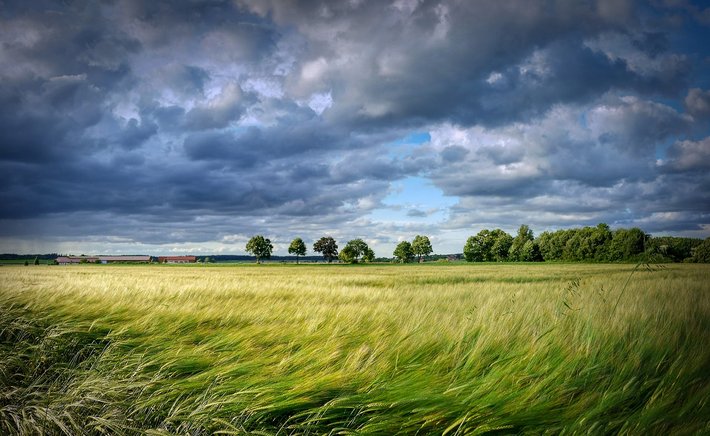
The first time old Mr. Halvorsen asked me to help him bring in hay, I said yes for the wrong reasons. I said yes because I wanted to be useful, because I wanted to know my neighbors, because I had read too many books about rural life and believed that haying was a kind of meditation. It is not a meditation. It is a race against the sky.
We worked for three days that first week, and on the third afternoon he stopped in the middle of the field, looked up, and said, "We're done. Storm's coming." I looked up too, and saw nothing but blue. Not a cloud, not a breeze, not a sign of anything but a perfect June afternoon. I thought he was joking. He was not joking. Forty minutes later, the sky turned the color of a bruise and the rain came down sideways and we watched from the barn as the unraked hay flattened into the mud.
The Sky Has a Grammar
Over the next several seasons, Mr. Halvorsen taught me to read the sky the way you read a letter from someone you love. Slowly, and with attention to the small things. The way the wind shifts before a front comes through. The way the clouds stack up in the west like dishes in a drying rack. The way the birds go quiet an hour before the rain, and the way the cows lie down, and the way the air itself gets a certain weight to it, a thickness, as if the sky is holding its breath.
He never called it forecasting. He called it paying attention. "The weatherman tells you what's going to happen," he said once, while we were fixing a fence in the July heat. "The sky tells you what's happening now. Those are two different things, and one of them is more useful."
I have thought about that a lot since. We live in a time when everything is forecast. The weather, the economy, the trajectory of our lives. We are told what is coming so constantly that we have stopped looking up. But the sky is still there, still speaking in its old grammar, and most of us have forgotten how to read it.
What the Clouds Are Saying
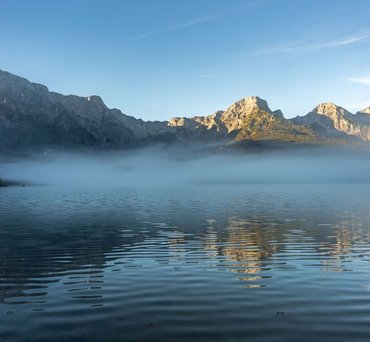
Here is what I have learned to read, imperfectly. That a halo around the moon means rain within a day. That mares' tails high in the sky mean a change is coming, and the direction they point tells you where it is coming from. That a green sky in the afternoon is not a metaphor, it is a warning. That fog in the valley in the morning will burn off by ten, and if it doesn't, the day will be gray and you should plan accordingly.
None of this is science, exactly. It is something older than science, something that farmers have known for as long as there have been farmers, and that most of us traded for a smartphone app without even noticing the trade. I am not against forecasts. I check the radar before I drive to town. But I also step outside every morning and look up, and I try to hear what the sky is saying, because it is always saying something.
Mr. Halvorsen is gone now, and the hay fields have been sold to a man who runs a combine and checks his phone. But I still stop in the middle of my yard sometimes, in the middle of a perfect blue afternoon, and look west, and wait for the sky to tell me what is coming. It usually does. You just have to be willing to listen.

Author

22 feb,2025
This incident opened my eyes to the value of Insurance in general, so I decided to examine my personal and business insurance.
Comment (3)
The payments are made directly from one person to another without passing through a central bank or clearing house.
22 feb,2025
ReplyWhat the Fog on the Water Taught Me About Not Knowing
23 feb,2025
ReplyThe Summer I Learned to Do Nothing in a Rowboat
23 feb,2025
Reply